

华为和我们,是双向奔赴
9月19日,东风风行星海V6(配置|询价)正式上市。相比一款普通新车的上市,星海V6更值得关注的地方,在于它试图回答一个越来越现实的问题,当智能驾驶逐渐从高端车型向主流市场下探,十万元级家庭用户究竟能不能真正享受到经过市场验证的高阶智能化体验?
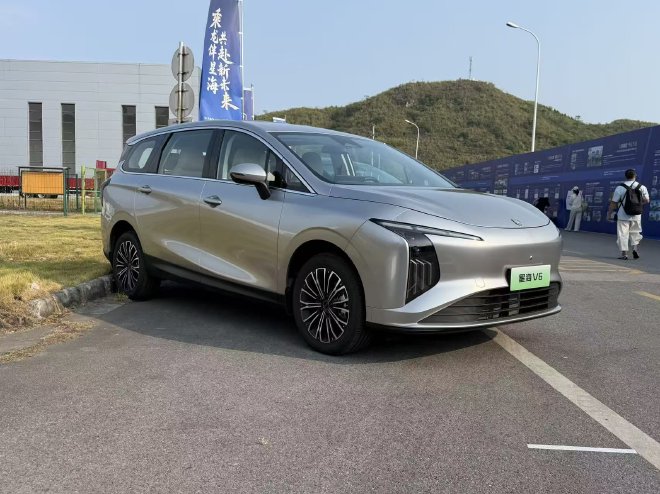
星海V6给出的答案,是把华为乾崑智驾带到十万级,同时将大六座、纯电、灵活空间以及真实续航等家庭用户高频需求集中到一台车上。更重要的是,这并不是简单地把一套高端配置“下放”,而是东风风行从产品定义、研发体系、供应链协同到成本控制的一次系统性尝试。
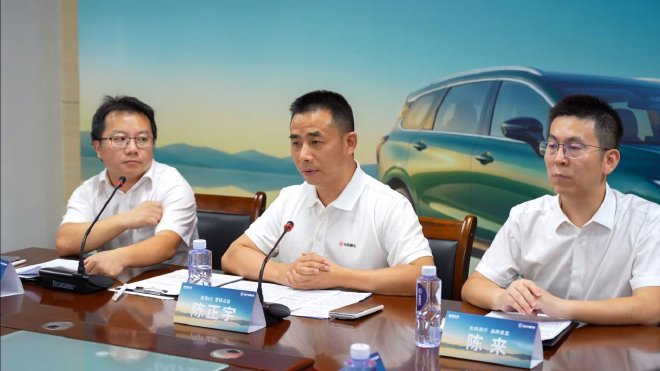
在上市后的媒体群访中,东风风行星海V6营销总监陈正宇、产品总监潘文军以及东风风行品牌总监陈来,围绕星海V6为什么要做、为什么能够做到十万级、用户到底需要什么,以及未来与华为如何继续合作等问题,进行了详细解读。
所以,第一个问题,也是大家都想知道的,为什么一定要做十万级华为乾崑智驾?“首先,东风风行品牌一直致力于打造智慧亲民的产品。”在陈正宇看来,星海V6的诞生并不是单纯追逐市场热点,而是建立在家庭用户结构变化和智能化趋势变化两个基础之上。
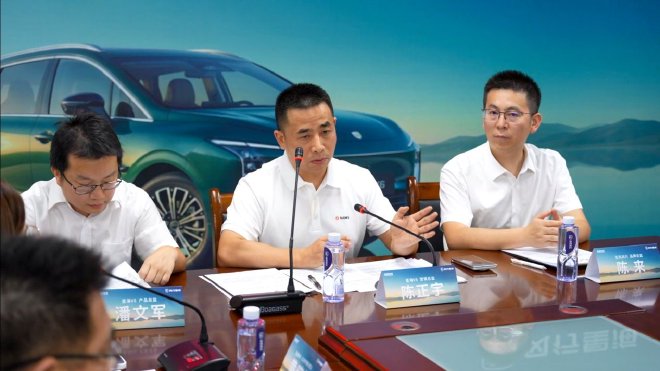
过去几年,中大型SUV和中大型MPV市场快速增长。随着多孩家庭、三代同堂家庭增多,大空间逐渐从一项“享受型配置”变成很多家庭的刚需。而与此同时,智能化也正在从高端车型向主流市场快速普及。
陈正宇在采访中提到,他们判断到2026年,高端车型的智驾渗透率将接近70%,但10万—15万元这个最为庞大的主流消费区间,智驾渗透率仍然不高。
问题恰恰出现在这里,消费者并不是不需要,而是市场上很难找到真正合适的产品。
“从我们的调研来看,广大消费者是想要好的智驾的,但是市场上确实很难碰到合适的产品。”这也成为星海V6选择华为乾崑智驾的重要原因。陈正宇把东风风行的选择概括得很直接:“我们作为造车的国家队,既有担当也有能力,把产品造好、把品控做好、把成本控制好,与华为乾崑智驾合作,让大六座SUV一步到位,进入十万级市场。”
但真正做起来远比一句话复杂。“这个过程我们经历了两年,虽然很痛苦,一边想把好的功能配置给到消费者,另一边还要控制好成本、价格,但最终把这种痛苦转化成了我们满意的产品。”这句话或许是理解星海V6整个开发过程的一个关键。因为星海V6并不是简单地把一款原本20万元甚至更高价格区间的产品“降价”,而是从一开始就按照十万级家庭用户的需求重新定义产品。
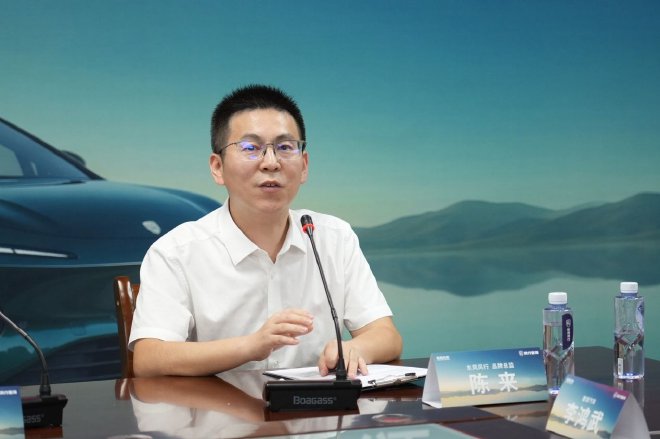
东风风行品牌总监陈来则进一步解释了星海V6与华为合作背后的逻辑。在东风集团层面,东风与华为已经形成了较为全面的战略合作,包括岚图、猛士、奕派等品牌均在不同领域展开合作。对于东风风行而言,其在集团内部承担的是“智慧亲民的新能源汽车品牌”角色。
“最好的华为在东风。”陈来用这句话概括了东风集团与华为合作的大背景,而在具体到星海V6时,他认为双方的目标恰好高度一致:东风风行希望把智能化带给主流家庭用户,而华为乾崑本身也希望让智驾进入更多车辆。
“华为乾崑智驾本身的愿景是把智驾带到每一辆车,也不应该只是30万车的专属。”因此,陈来将双方的合作形容为“双向奔赴、一拍即合”。
那华为乾崑为什么能够做到十万级?问题很快来到最核心的一层,华为乾崑智驾此前更多出现在更高价格区间的产品中,星海V6究竟是怎么把成本压下来的?对此,潘文军给出了非常详细的答案。
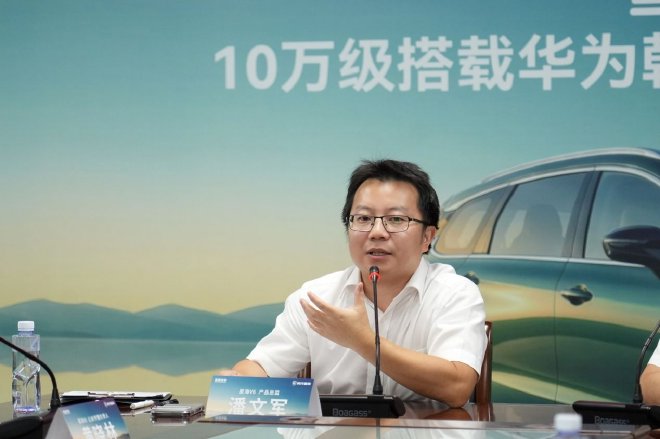
首先,是研发体系。“东风风行从2019年开始就导入了华为IPD研发流程,我们是最早一批与华为合作的车企。”在潘文军看来,IPD并不仅仅是一套研发流程,更是一套围绕商业成功建立起来的方法论。东风风行与华为在体系和流程上的长期磨合,为后续乾崑智驾合作提供了基础。
其次,是东风集团的规模化采购优势。东风集团每年拥有数百万辆的规模采购能力,华为零部件费用以及开发费用等,都能够通过规模化方式降低边际成本。与此同时,东风柳汽所在的柳州本身就是汽车产业重镇,拥有完善的产业链资源。
但真正让潘文军认为星海V6“有别于传统做法”的,是他们在产品开发过程中对“平台化”的理解发生了变化。“过去是追求平台化和通用化……但是在我们这个项目中,我们采取的是更高维度的同用户,就是社会的平台化和通用化。”
简单来说,星海V6并没有从零开始打造所有零部件,而是通过调研和对标行业十多款爆款车型,尽可能使用经过大规模市场验证的成熟资源,再通过自身产品设计进行匹配。
这样做的好处非常明显:一方面降低供应商研发投入和风险,另一方面也可以直接利用行业规模效应。“第一它是大规模验证过的,第二因为它有规模效应,而且它是整个行业的规模效应,所以在行业里面是具有独特竞争力的。”
第三个变化来自供应链合作模式。潘文军透露,为了控制成本,星海V6没有简单采取传统的招标、竞标模式,而是采用了“商业计划书”的方式。这件事情甚至延伸到了整个供应链体系。他提到,陈正宇带领团队走了成都、柳州、南通、周口、沈阳、太原六站,而他自己在产品开发过程中则讲了一百多站,与核心供应商一对一沟通商业计划书。
“他们也确实看到了这个市场机会,他们也觉得做这个事情不仅仅是一个生意、一个项目,也是为中国汽车工业做出贡献的。”正是这种方式,让不少头部供应商愿意以爆款车型的价格参与项目。
第四个关键,是技术集成。星海V6采用六合一电驱,同时在热管理等方面进行高度集成,并通过集成化减少零部件数量。潘文军举了一个很直观的例子:此前机舱里有22根水管,经过整合之后只剩下6根。“这些东西整合之后,关联件也少了。所以整体下来,我们的成本,各方面都是非常优秀的。”
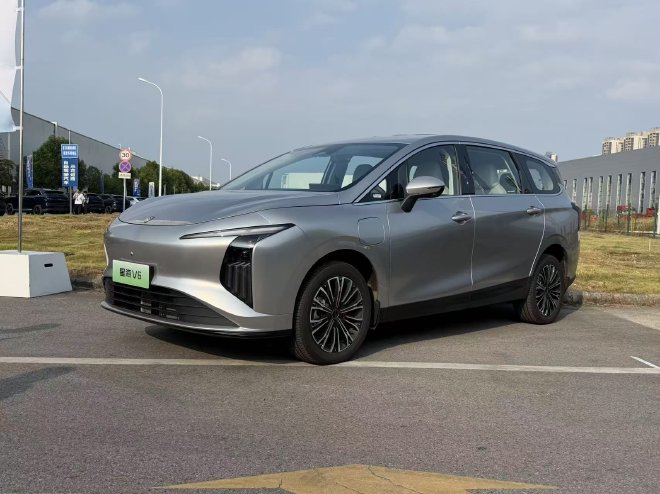
这些看起来并不起眼的工程细节,最终共同构成了星海V6能够进入十万级市场的基础。不只是“把华为智驾做便宜”
如果仅仅把星海V6理解为“十万级华为智驾车型”,实际上并不能完全解释这款车的产品逻辑。陈正宇有一句话很值得注意:“我觉得别人去,有别人去的道理,我们拥抱,也有我们拥抱的道理。”
对于东风风行而言,选择华为并不是为了借助一个品牌标签,而是基于用户真实需求做出的选择。陈正宇透露,在前期调研过程中,他们发现消费者对智驾的认知非常明确——“华为和其他”。
“大家知道华为好,华为贵。”问题就在于,如何把消费者认可的智驾能力,以主流家庭能够接受的价格提供出来。所以星海V6最终选择的是“用户需要什么,就把什么做到极致”。
陈来也特别强调,星海V6的出发点并不是“把高科技做便宜”。“星海V6并不是要把好东西、高科技或高阶配置做便宜,这不是原始出发点。我们的出发点是以用户为中心,把家庭最关注的几个需求点做到极致。”
这也是星海V6产品定义最核心的逻辑。四千多名用户告诉他们:家庭用户真正需要什么?为了搞清楚“十万级大六座家庭用户到底想要什么”,星海V6并没有闭门造车。
潘文军透露,团队进行了半年调研,覆盖40多个城市,同时延伸到东南亚、欧洲、非洲等市场,一对一访谈超过4000人,前后进行了七轮方案验证。“你不知道要干什么的时候,是最煎熬的。”
这是潘文军回忆产品定义阶段时的一句话。但也正是这一轮轮调研,让星海V6逐渐明确了自己的产品方向。陈正宇在六站用户品鉴活动中,同样得到了非常清晰的反馈。“最大的共同点是:对这款车感兴趣的,基本都是家庭顶梁柱,家里有一个、两个甚至三个孩子,或者是三代同堂的大家庭。”
从用户需求来看,约70%的用户关注“可四可六的百变大空间”,同时有60%多的用户关注华为乾崑智驾。这意味着,对于星海V6而言,智驾并不是唯一卖点。它首先是一台面向家庭用户的大六座SUV,然后才是一台拥有华为乾崑智驾的智能汽车。而这也解释了为什么星海V6没有单纯把成本投入到智能驾驶上,而是同时在空间、续航、泊车等家庭高频场景上下功夫。
4米8车长,为什么能做出“大六座”?“别人不信——你要大,大不过五米四的车。”这是潘文军在采访中谈到空间时的一句原话。星海V6车长约4.8米,但产品团队却希望在这个尺寸里做出真正意义上的大六座。
第三排不仅要能够坐人,还要能够下沉收纳;六人满载时要保证乘坐空间,同时还要留出足够的储物空间。更特别的是,星海V6还做出了70L前备箱。潘文军用一个非常形象的比喻来解释这种空间利用率:“就像买房子一样,如果做下沉式设计,有点类似于多了一个地下停车场,相当于买一层得两层。”他甚至认为,虽然星海V6只有4米8左右的车身,但实际使用空间效率可以接近5米级车型。而这个空间设计背后,依然是工程技术与产品定义共同作用的结果。
因为星海V6采用前驱布局,前舱本身已经需要容纳电机、电控等动力系统,要在这样的前舱里进一步挤出前备箱,并不容易。同时,第三排下沉又要求车身底部拥有足够的空间。
集成化设计最终帮助团队解决了这两个看似矛盾的问题。“这也是我们设计导向的结果。所以这个技术我认为在当下还是有一些独特性的。”对于家庭用户而言,这种设计最终会转化成非常具体的使用场景:榴莲、海鲜等有异味的物品可以单独放在前备箱;露营、钓鱼时,第三排放倒之后又能获得更大的储物空间。
这也让星海V6的“空间”从简单的尺寸竞争,变成了使用效率竞争。
智驾的重点,不只是“能不能开”在智驾方面,陈正宇并没有单纯强调技术参数,而是更多从用户场景进行介绍。城市通勤中,车道保持、自适应巡航、主动避险、红绿灯自动启停等功能覆盖高频场景;泊车方面,则依托华为乾崑的算力,实现普通车位泊入、记忆泊车以及窄车位泊车等功能。
高速场景则是星海V6重点展示的另一项能力。陈正宇透露,在一次249公里的单程直播测试中,全程仅出现一次人工接管,而原因是交警临时封路导致导航偏离。“即便遇到修路、车道收窄等复杂路况,系统运行依然丝滑流畅。”不过,东风风行并没有把星海V6的智驾逻辑定义成“功能越多越好”。
陈来透露,在用户调研中,当被要求对智驾功能按照优先级进行选择时,消费者给出的答案非常明确,首先是安全,其次是好停,再其次是高速和跨城出行,最后才是城市端到端。因此,星海V6选择优先把主动安全、泊车、高速NCA以及城区LCC+等功能做好。“我们自己的判断是:智能化普及一定会下探到十万级,甚至十万以内。”
陈来认为,这只是智能化普及的阶段问题。未来,随着成本继续下降,十万级车型的智驾能力还会继续提升。
星海V6的竞争对手是谁?面对“大六座市场越来越拥挤”的问题,陈正宇的回答其实非常直接。“严格来讲,在十万级市场,既搭载华为乾崑智驾、又是大六座的产品,目前并没有同类竞品。”这也成为星海V6产品定位中非常重要的一环。但陈正宇并没有把竞争理解成单纯的配置竞争,而是从用户需求出发,归纳了星海V6的三个核心产品标签。
一个是十万级华为乾崑智驾大六座,一个是纯电大六座,一个是可以在四座和六座之间灵活切换的大六座。陈来则进一步解释,星海V6与星海V9(配置|询价)虽然都强调家用,但产品定位有所区隔。星海V9定位中大型豪华MPV,更强调“豪华增配,一部到位”,兼顾家用和商用;星海V6则更加聚焦纯粹的家庭使用场景。
两者共同延续的,则是东风风行一直强调的“科技普惠、豪华平权”。
为什么还要推出探索版?除了标准版星海V6,此次上市还出现了探索版。陈来透露,这背后依然与东风风行对空间和家庭出游场景的理解有关。相比常见的后市场改装,东风风行希望探索版从一开始就进入原厂体系。
第一是原厂质保;第二是原厂设计、制造和质量控制;第三则是围绕露营、短途旅行、长途旅行以及家庭出游打造更加完整的生态服务。这意味着东风风行对于探索版的理解,并不是简单增加一些户外装备,而是试图让汽车从交通工具进一步延伸到家庭生活空间。
与华为的合作,还会走多远?对于东风风行与华为未来的合作,三位负责人都释放了比较明确的信号。陈来透露,除了2019年开始导入华为IPD研发体系、之后开展智驾合作之外,今年7月双方还在南宁签署了智能制造方面的合作协议。未来,双方还计划在座舱、华为云、华为钥匙以及底盘等方面进一步沟通。
而在智驾之外,东风风行本身也并没有放弃自主研发。潘文军透露,东风风行拥有独立的智能软件中心和自动驾驶中心,同时也与国内其他主流智驾技术展开合作。
在海外市场,目前东风风行主要采用除华为之外的自动驾驶平台,但双方也正在探讨华为相关技术出海的可能性。因此,华为对于东风风行而言,更像是一套开放合作体系中的重要技术伙伴,而不是唯一技术来源。
十万级华为智驾,是一次产品尝试,也是一次商业模式尝试,星海V6真正值得关注的地方,或许并不只是“十万级华为乾崑智驾”这一个标签。从研发体系到供应链,从成本控制到技术集成,从用户调研到产品定义,东风风行实际上是在尝试建立一套新的主流新能源汽车开发方法。
陈来提到,华为乾崑目前已经拥有较大的装车规模,规模化带来的边际成本下降,也让更多主流车型使用高阶智能化方案成为可能。与此同时,东风集团与华为的全面合作,也让星海V6获得了集团采购、研发资源共享等方面的规模优势。
这也是为什么陈来认为,星海V6并不是一个孤立项目。“未来合作一旦夯实以后,我们会和华为在10-15万级的合作更全面、更深入。”而陈正宇则把这种合作关系定义得更加直接,“星海V6是我们第一个开始的产品,实际上我们第二个产品都已经立项了,上市的时候一定会和星海V6一样,会成为行业颠覆性的产品。”
从星海V6开始,东风风行显然希望探索一条属于自己的新能源转型路径:不是单纯堆配置,也不是简单把高端技术向下复制,而是从十万级家庭用户真正需要什么出发,再通过研发体系、产业链和规模化能力,把这些需求逐一落地。这也是这场群访留给外界最清晰的信息。
正如陈正宇所说:“市场有这个需要,我觉得我们作为造车的国家队,既有担当也有能力。”而潘文军所说的那句“既要便宜、又要好、还要稳定”,则更像是星海V6整个产品开发过程的注脚。对于东风风行而言,星海V6真正要验证的,不只是十万级市场能不能拥有华为乾崑智驾,而是当智能化、空间、续航和家庭场景被重新组合之后,主流家庭用户究竟愿意为什么买单。
如果这套方法能够跑通,星海V6就不只是一款十万级大六座SUV,更可能成为东风风行后续产品向主流新能源市场持续进攻的一次重要样本。
Huawei and us are heading in both directions
On September 19th, Dongfeng Fengxing Xinghai V6 (configuration | inquiry) was officially launched. Compared to the launch of an ordinary new car, the more noteworthy aspect of the Xinghai V6 is that it attempts to answer an increasingly realistic question. As intelligent driving gradually moves from high-end models to mainstream markets, can 100000 yuan level family users truly enjoy the market proven advanced intelligent experience?
Interpretation of the product ambition behind the Xinghai V6: Huawei and us are heading in both directions
The answer given by Xinghai V6 is to bring Huawei Qiankun intelligent driving to the 100000 level, while consolidating high-frequency household user needs such as large six seater, pure electric, flexible space, and real range into one car. More importantly, this is not simply a "delegation" of a set of high-end configurations, but a systematic attempt by Dongfeng Fengxing from product definition, research and development system, supply chain collaboration to cost control.
Interpretation of the product ambition behind the Xinghai V6: Huawei and us are heading in both directions
In a media group interview after its listing, Chen Zhengyu, Marketing Director of Dongfeng Fengxing Xinghai V6, Pan Wenjun, Product Director, and Chen Lai, Brand Director of Dongfeng Fengxing, provided detailed explanations on why Xinghai V6 needs to be developed, why it can reach 100000 level, what users really need, and how to continue to cooperate with Huawei in the future.
So, the first question, which everyone wants to know, is why do we have to make a 100000 level Huawei Qiankun intelligent driving?
Firstly, Dongfeng Fengxing brand has always been committed to creating smart and affordable products. In Chen Zhengyu's view, the birth of Xinghai V6 is not simply chasing market hotspots, but is built on the basis of changes in household user structure and intelligent trends.
Interpretation of the product ambition behind the Xinghai V6: Huawei and us are heading in both directions
In the past few years, the market for mid to large sized SUVs and MPVs has grown rapidly. With the increasing number of families with multiple children and three generations living together, large spaces have gradually become a necessity for many families, rather than just an "enjoyment oriented configuration". At the same time, intelligence is rapidly spreading from high-end car models to mainstream markets.
Chen Zhengyu mentioned in an interview that they predict that by 2026, the penetration rate of intelligent driving in high-end car models will approach 70%, but the mainstream consumption range of 100000 to 150000 yuan, the penetration rate of intelligent driving, is still not high.
The problem lies precisely here, where consumers do not necessarily need it, but rather find it difficult to find truly suitable products in the market.
From our research, it can be seen that the majority of consumers want good intelligent driving, but it is indeed difficult to find suitable products in the market. This has become an important reason why Xinghai V6 chooses Huawei Qiankun Intelligent Driving. Chen Zhengyu summarized Dongfeng Fengxing's choice very directly: "As a national team in car manufacturing, we have both responsibility and ability to make good products, quality control, and cost control. We have cooperated with Huawei Qiankun Intelligent Driving to make the large six seater SUV one step ahead and enter the 100000 level market. ”
But actually doing it is far more complex than just one sentence. We went through this process for two years, although it was very painful. On the one hand, we wanted to provide consumers with good functional configurations, and on the other hand, we had to control costs and prices. However, in the end, we transformed this pain into a product that we were satisfied with. "This sentence may be a key to understanding the entire development process of Xinghai V6. Because the Xinghai V6 is not simply "lowering the price" of a product that originally had a price range of 200000 yuan or even higher, but redefining the product according to the needs of 100000 level household users from the beginning.
Interpretation of the product ambition behind the Xinghai V6: Huawei and us are heading in both directions
Chen Lai, the brand director of Dongfeng Fengxing, further explained the logic behind the cooperation between Xinghai V6 and Huawei. At the level of Dongfeng Group, Dongfeng has formed a comprehensive strategic cooperation with Huawei, including brands such as Lantu, Mengshi, and Yipai, which have all cooperated in different fields. For Dongfeng Fengxing, it plays the role of a "smart and affordable new energy vehicle brand" within the group.
The best Huawei is in Dongfeng. "Chen summarized the background of the cooperation between Dongfeng Group and Huawei with this sentence. When it comes to the Xinghai V6, he believes that the goals of both sides are highly consistent: Dongfeng Fengxing hopes to bring intelligence to mainstream home users, while Huawei Qiankun itself hopes to bring intelligent driving into more vehicles.
The vision of Huawei Qiankun Intelligent Driving itself is to bring intelligent driving to every car, and it should not be exclusive to 300000 cars. Therefore, Chen Lai described the cooperation between the two parties as "two-way rush and instant agreement".
Why can Huawei Qiankun achieve 100000 level?
The question quickly comes to the core level. Huawei Qiankun Intelligent Drive has appeared more in products with higher price ranges before. How did Xinghai V6 reduce costs? Pan Wenjun provided a very detailed answer to this.
Interpretation of the product ambition behind the Xinghai V6: Huawei and us are heading in both directions
Firstly, it is the research and development system. Dongfeng Fengxing has been introducing Huawei's IPD research and development process since 2019, and we are one of the earliest car companies to cooperate with Huawei. ”In Pan Wenjun's view, IPD is not just a set of research and development processes, but also a methodology built around commercial success. The long-term integration of Dongfeng Fengxing and Huawei in terms of system and process has provided a foundation for the subsequent cooperation between Qiankun Intelligent Driving.
Secondly, Dongfeng Group has the advantage of large-scale procurement. Dongfeng Group has the ability to purchase millions of vehicles annually, and Huawei's component and development costs can all be reduced through economies of scale to lower marginal costs. At the same time, Liuzhou, where Dongfeng Liuzhou Automobile is located, is already a major hub of the automotive industry with a complete industrial chain resources.
But what really made Pan Wenjun believe that Xinghai V6 was "different from traditional methods" was their change in understanding of "platformization" during the product development process. In the past, we pursued platformization and generalization... but in our project, we adopt a higher dimension of same users, which is the platformization and generalization of society
Simply put, the Xinghai V6 did not build all its components from scratch. Instead, it researched and benchmarked more than ten popular models in the industry, using mature resources that have been validated in the market on a large scale, and matched them through its own product design.
The benefits of doing so are very obvious: on the one hand, it reduces supplier R&D investment and risk, and on the other hand, it can directly utilize industry scale effects. Firstly, it has been validated on a large scale, and secondly, because it has economies of scale and is the scale effect of the entire industry, it has unique competitiveness within the industry
The third change comes from the supply chain cooperation model.
Pan Wenjun revealed that in order to control costs, Xinghai V6 did not simply adopt the traditional bidding and tendering model, but instead used a "business plan" approach. This matter even extends to the entire supply chain system. He mentioned that Chen Zhengyu led the team to visit six stations in Chengdu, Liuzhou, Nantong, Zhoukou, Shenyang, and Taiyuan, while he himself talked to more than 100 stations during the product development process and communicated business plans one-on-one with core suppliers.
They have indeed seen this market opportunity and believe that doing this is not just a business or a project, but also a contribution to the Chinese automotive industry. It is this approach that has made many top suppliers willing to participate in projects at the price of popular car models.
The fourth key is technology integration.
The Xinghai V6 adopts a six in one electric drive and is highly integrated in thermal management and other aspects, reducing the number of components through integration. Pan Wenjun gave a very intuitive example: there were 22 water pipes in the cabin before, but after integration, only 6 were left. After integrating these things, there are fewer related components. So overall, our costs and all aspects are very excellent
Interpretation of the product ambition behind the Xinghai V6: Huawei and us are heading in both directions
These seemingly insignificant engineering details ultimately form the foundation for the Xinghai V6 to enter the 100000 level market. Not just 'making Huawei's intelligent driving cheaper'
If we only understand the Xinghai V6 as a "100000 level Huawei intelligent driving model", it cannot fully explain the product logic of this car. Chen Zhengyu has a saying that is worth noting: "I think when others go, there is a reason for others to go. When we embrace, there is also a reason for us to embrace
For Dongfeng Fengxing, choosing Huawei is not about using a brand label, but a choice made based on the real needs of users. Chen Zhengyu revealed that during the preliminary research process, they found that consumers have a very clear understanding of smart driving - "Huawei and others".
Everyone knows that Huawei is good, but it is precious. The problem is how to provide the intelligent driving capabilities recognized by consumers at a price that mainstream families can accept. So the ultimate choice of Xinghai V6 is to 'do whatever users need to the extreme'.
Chen Lai also emphasized that the starting point of Xinghai V6 is not to "make high-tech cheap". The Xinghai V6 is not meant to make good things, high-tech or high-end configurations cheap, this is not the original starting point. Our starting point is to put the user at the center and achieve the ultimate goal of meeting the most important needs of the family. ”
This is also the core logic of the product definition for Xinghai V6. More than 4000 users told them: What do household users really need? In order to clarify what "100000 level six seater family users really want", Xinghai V6 did not work in isolation.
Pan Wenjun revealed that the team conducted half a year of research, covering more than 40 cities and extending to markets such as Southeast Asia, Europe, and Africa. They interviewed over 4000 people one-on-one and conducted seven rounds of program validation before and after. When you don't know what to do, it's the most agonizing
This is a sentence from Pan Wenjun's recollection of the product definition stage. But it is also this round of research that has gradually clarified the product direction of Xinghai V6. Chen Zhengyu also received very clear feedback during the six station user tasting activity. The biggest commonality is that those who are interested in this car are basically the backbone of their families, with one, two, or even three children, or large families with three generations living together
From the perspective of user demand, about 70% of users are interested in the "versatile space with four or six options", while over 60% of users are interested in Huawei Qiankun Intelligent Driving. This means that for the Xinghai V6, intelligent driving is not the only selling point. It is first a large six seater SUV designed for home users, and then an intelligent car equipped with Huawei Qiankun Intelligent Driving. And this also explains why the Xinghai V6 did not simply invest costs in intelligent driving, but also put effort into high-frequency household scenarios such as space, range, and parking.
Why can a car with a length of 4.8 meters be made into a "six seater" configuration? Others don't believe it - you need a big car, no bigger than 5.4 meters. "This is a quote from Pan Wenjun when talking about space in an interview. The Xinghai V6 is about 4.8 meters long, but the product team hopes to create a truly large six seater in this size.
The third row should not only be able to accommodate people, but also be able to sink and store; When six people are fully loaded, ensure adequate seating space while also leaving enough storage space. What's even more special is that the Xinghai V6 also features a 70L front trunk. Pan Wenjun used a very vivid metaphor to explain this space utilization rate: "It's like buying a house. If we do a sunken design, it's a bit like adding an underground parking lot, which is equivalent to buying two floors for one floor." He even believes that although the Xinghai V6 only has a body of about 4.8 meters, the actual space efficiency can be close to that of a 5-meter class car. And behind this spatial design, it is still the result of the combined action of engineering technology and product definition.
Because the Xinghai V6 adopts a front wheel drive layout, the front compartment itself already needs to accommodate power systems such as motors and electronic controls. It is not easy to further squeeze out the front spare box in such a front compartment. At the same time, the sinking of the third row requires sufficient space at the bottom of the vehicle.
Integrated design ultimately helped the team solve these two seemingly contradictory problems. This is also the result of our design orientation. So I think this technology still has some uniqueness at present. For home users, this design will eventually translate into very specific usage scenarios: items with odors such as durian and seafood can be placed separately in the front trunk; When camping or fishing, the third row can be folded down to obtain larger storage space.
This has also transformed the "space" of the Xinghai V6 from a simple competition in size to a competition in efficiency.
The key to intelligent driving is not just whether it can be driven or not。
In terms of intelligent driving, Chen Zhengyu did not simply emphasize technical parameters, but introduced more from user scenarios. In urban commuting, functions such as lane keeping, adaptive cruise control, active risk avoidance, and automatic start stop of traffic lights cover high-frequency scenarios; In terms of parking, it relies on the computing power of Huawei Qiankun to achieve functions such as parking in regular parking spaces, memory parking, and narrow parking spaces.
The high-speed scenario is another key capability showcased by the Xinghai V6. Chen Zhengyu revealed that during a 249 kilometer one-way live test, there was only one manual takeover throughout the entire journey, and the reason was that the traffic police temporarily closed the road, causing navigation deviation. Even in complex road conditions such as road repairs and lane narrowing, the system still runs smoothly and smoothly. However, Dongfeng Fengxing did not define the intelligent driving logic of the Xinghai V6 as "the more functions, the better".
Chen Lai revealed that in user research, when asked to prioritize the selection of intelligent driving functions, consumers gave very clear answers: first is safety, followed by easy parking, then high-speed and cross city travel, and finally city end-to-end. Therefore, Xinghai V6 chooses to prioritize functions such as active safety, parking, high-speed NCA, and urban LCC+. Our own judgment is that the popularization of intelligence will definitely reach the level of 100000, or even within 100000
Chen Lai believes that this is only a stage issue in the popularization of intelligence. In the future, as costs continue to decrease, the intelligent driving capabilities of 100000 level models will continue to improve.
Who are the competitors of Xinghai V6?
Chen Zhengyu's answer to the question of "the increasingly crowded market of the Big Six" is actually very direct. Strictly speaking, in the 100000 level market, there are currently no similar competitors that are equipped with both Huawei Qiankun Intelligent Driving and large six seater products. This has also become a very important part of the positioning of Xinghai V6 products. But Chen Zhengyu did not understand competition as simply a configuration competition, but rather summarized the three core product labels of Xinghai V6 based on user needs.
One is the 100000 level Huawei Qiankun Intelligent Driving Big Six Seat, one is the pure Big Six Seat, and the other is the Big Six Seat that can be flexibly switched between four and six seats. Chen Lai further explained that although both Xinghai V6 and Xinghai V9 (configuration | inquiry) emphasize home use, there is a differentiation in product positioning. The Xinghai V9 is positioned as a mid to large luxury MPV, with a greater emphasis on "luxury upgrades, one in place", catering to both household and commercial use; The Xinghai V6 focuses more on pure home use scenarios.
The common continuation of both is Dongfeng Fengxing's emphasis on "technology inclusiveness and luxury equality".
Why launch an exploration version?
In addition to the standard version of Xinghai V6, an exploratory version has also been released this time. Chen Lai revealed that this is still related to Dongfeng Fengxing's understanding of space and family travel scenes. Compared to common aftermarket modifications, Dongfeng Fengxing hopes that the exploratory version will enter the original factory system from the beginning.
The first is the original factory warranty; The second is original factory design, manufacturing, and quality control; The third is to create a more complete ecological service around camping, short distance travel, long-distance travel, and family outings. This means that Dongfeng Fengxing's understanding of the Exploration Edition is not simply to add some outdoor equipment, but to attempt to further extend cars from transportation to family living spaces.
How far will cooperation with Huawei go?
For the future cooperation between Dongfeng Fengxing and Huawei, the three responsible persons have all sent clear signals. Chen Lai revealed that in addition to the introduction of Huawei's IPD R&D system in 2019 and subsequent cooperation on intelligent driving, the two sides also signed a cooperation agreement on intelligent manufacturing in Nanning in July this year. In the future, both parties plan to further communicate on cockpit, Huawei Cloud, Huawei keys, and chassis.
Besides intelligent driving, Dongfeng Fengxing itself has not given up on independent research and development. Pan Wenjun revealed that Dongfeng Fengxing has independent intelligent software center and autonomous driving center, and also cooperates with other mainstream intelligent driving technologies in China.
In overseas markets, Dongfeng Fengxing currently mainly uses autonomous driving platforms other than Huawei, but both parties are also exploring the possibility of Huawei's related technologies going global. Therefore, for Dongfeng Fengxing, Huawei is more like an important technology partner in an open cooperation system, rather than the only source of technology.
The 100000 level Huawei Intelligent Driving is a product attempt and a business model attempt. The truly noteworthy aspect of the Xinghai V6 may not be just the label of "100000 level Huawei Qiankun Intelligent Driving". From R&D system to supply chain, from cost control to technology integration, from user research to product definition, Dongfeng Fengxing is actually trying to establish a new mainstream new energy vehicle development method.
Chen Lai mentioned that Huawei Qiankun currently has a large scale of vehicle installation, and the marginal cost reduction brought by scale also makes it possible for more mainstream models to use advanced intelligent solutions. At the same time, the comprehensive cooperation between Dongfeng Group and Huawei has also given Xinghai V6 a scale advantage in group procurement, R&D resource sharing, and other aspects.
That's also why Chen Lai believes that the Xinghai V6 is not an isolated project. Once the future cooperation is solidified, we will have a more comprehensive and in-depth cooperation with Huawei at the 100000-150000 level, "Chen Zhengyu defined this partnership more directly." The Xinghai V6 is our first product, and in fact, our second product has already been approved. When it is launched, it will definitely become a disruptive product in the industry, just like the Xinghai V6. ”
Starting from the Xinghai V6, Dongfeng Fengxing clearly hopes to explore its own path of new energy transformation: it is not simply about pile configuration or simply copying high-end technology downwards, but starting from what 100000 level household users really need, and then implementing these needs one by one through research and development systems, industrial chains, and scale capabilities. This is also the clearest message left by this group interview to the outside world.
As Chen Zhengyu said, "The market has this demand, and I think as a national team in car manufacturing, we have both responsibility and ability." And Pan Wenjun's statement, "We need to be cheap, good, and stable," is more like a footnote to the entire product development process of Xinghai V6. For Dongfeng Fengxing, what Xinghai V6 really needs to verify is not just whether the 100000 level market can have Huawei Qiankun Intelligent Driving, but why mainstream home users are willing to pay when intelligence, space, range, and home scenarios are recombined.
If this method can run smoothly, the Xinghai V6 will not only be a 100000 level six seater SUV, but may also become an important sample for Dongfeng Fengxing's subsequent products to continue to attack the mainstream new energy market.